Retro Happy Mother’s Day SVG Design Review
As a designer who spends more time than I care to admit staring at stitch patterns and debating thread weights, I approach every new machine embroidery design with a healthy dose of skepticism. The market is flooded with generic clip art that looks fine on a screen but falls apart under the needle. That is why I decided to put the Retro Happy Mother’s Day SVG Design through its paces. This isn’t just about whether it looks cute; it is about whether it works as a viable asset for your craft business, your Etsy listings, or your next handmade gift.
The product description notes that this digital download comes from ideasStock Shop and includes a robust suite of formats: SVG, PNG, EPS, AI, PDF, DXF, and JPEG. For an Etsy seller or small shop product creator, having these design assets in multiple file types is a massive advantage. It means you aren’t locked into one workflow. You can use the vector files for large-scale printing on tote bags or cut them with a vinyl cutter for applique projects, while using the raster images for quick mockups. But does the core design hold up when we talk about actual stitching? Let’s dive in.
First Impressions: Mood and Visual Personality
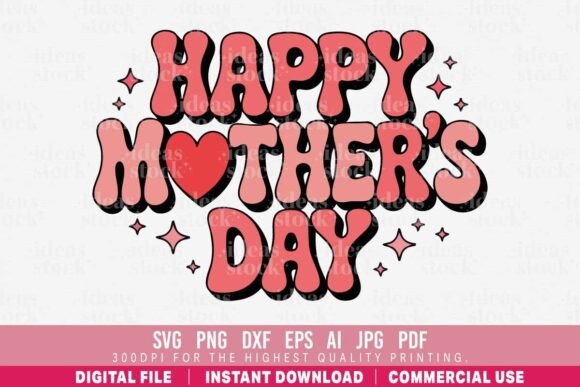
When you first load the Retro Happy Mother’s Day SVG Design into your digitizing software, the immediate takeaway is its nostalgic charm. The typography and layout lean heavily into mid-century aesthetics, which are currently dominating the handmade product space. There is a warmth to the curves and a playfulness in the spacing that feels authentic rather than forced. It doesn’t scream for attention; it invites the viewer in.
For a designer, the visual hierarchy is well-balanced. The phrase "Happy Mother’s Day" is likely the focal point, supported by decorative elements that frame the text without overwhelming it. This balance is crucial for embroidery project success. If the design is too cluttered, the stitches will compete with each other, resulting in a muddy finish. If it is too sparse, the fabric shows through, making the item look unfinished. This design strikes a confident middle ground, suggesting it will translate beautifully onto various substrates.
Real-World Application: From Screen to Stitch
I wanted to see how this embroidery file would perform in a high-stakes scenario: a custom boutique order. Imagine a client requesting a personalized sweatshirt for their mother. The Retro Happy Mother’s Day SVG Design is perfect for this because the retro vibe pairs exceptionally well with heather grey or soft pastel fabrics commonly used in sweatshirt embroidery.
However, the versatility extends beyond apparel. Consider a tote bag design. Using the SVG format, you can scale the design up to fill the front panel of a canvas bag. When stitched, the bold lines provide excellent contrast against the natural twill weave of the bag. Alternatively, this could be adapted into an applique design. By cutting the main shapes from contrasting felt or fleece and stitching them down with a tight satin stitch, you add texture and dimension that flat embroidery simply cannot achieve. This adds significant perceived value to the final piece, allowing you to charge a premium price for what was originally a simple digital download.
Another strong use case is baby items. A onesie or a burp cloth featuring this design offers a sweet, timeless look. The retro theme appeals to millennial and Gen Z parents who appreciate vintage aesthetics. When marketed correctly, this transforms a basic commodity into a sentimental keepsake. The key here is presentation. Showcasing the design on a printable mockup helps buyers visualize the end result, bridging the gap between digital purchase and physical reality.
Technical Considerations and Potential Pitfalls
No design is flawless, and as a reviewer, my job is to highlight where caution is needed. While the Retro Happy Mother’s Day SVG Design is visually appealing, its performance depends heavily on execution. Here are the critical factors to consider before sending it to the hoop.
- Hoop Size and Scale: Always check the dimensions. If the design is intended for a small chest logo placement, ensure the lettering remains legible. Tiny details in retro fonts can sometimes merge together if the stitch density is too high. Test the design in your specific hoop size to confirm there is enough negative space.
- Stitch Density: High-density areas can cause puckering, especially on lightweight fabrics like jersey knits or thin cottons. If you plan to embroider this on custom apparel made of stretchy material, you must use a stabilizer appropriate for the fabric weight. A tear-away stabilizer might leave residue, while a cut-away provides better support for garments that will be washed frequently.
- Thread Color Contrast: The retro palette usually implies warm tones—mustard yellows, burnt oranges, or dusty pinks. These colors pop beautifully on white or cream backgrounds but may get lost on dark fabrics unless you use a backing or change the thread color strategy. Always inspect small details in black-and-white mode to ensure contrast holds up.
- Fabric Texture: Be wary of using this design on highly textured fabrics like chunky wools or boucle. The needle may struggle to penetrate evenly, and the design details could become obscured. Stick to smooth surfaces like denim, canvas, or tightly woven cottons for the cleanest finish.
Best Practices for Commercial Use
If you are a commercial embroidery artist or selling finished goods, due diligence is essential. While the product description mentions multiple formats, it does not explicitly state the licensing terms for commercial use. Before listing any finished product on your shop, verify that you have the right to sell items made from this design. Some creators restrict the number of units sold or require attribution.
Furthermore, always test the design on scrap fabric first. This allows you to adjust thread tensions and evaluate how the stitch density interacts with your specific machine and needle type. Pay close attention to the corners of letters and decorative accents; these are common failure points where threads can break or tangle. If the design includes running stitch or fill stitch elements, ensure they are oriented correctly to minimize trimming and reduce the risk of thread breaks.
Final Verdict: Is It Worth Adding to Your Library?
The Retro Happy Mother’s Day SVG Design is a solid addition to any digital embroidery file library. Its strength lies in its versatility and broad appeal. It works equally well as a personal gift, a holiday embroidery project for friends, or a staple item in your craft business inventory.
For the creative entrepreneur, the inclusion of SVG, EPS, and AI files means you aren't just buying an embroidery pattern; you are acquiring a multi-purpose graphic asset. You can use it for sublimation prints, vinyl cuts, and print-on-demand products, maximizing the return on your investment. The retro aesthetic ensures it won't feel outdated quickly, giving it a longer shelf life than trend-dependent designs.
Ultimately, the success of this design depends on your technical skill. Embroidery is a tactile medium, and no amount of beautiful vector art can compensate for poor setup. However, if you approach this project with careful planning—selecting the right fabric, stabilizer, and thread colors—the Retro Happy Mother’s Day SVG Design has the potential to create stunning, professional-grade results. It captures the sentiment of the holiday with style and sophistication, making it a reliable choice for anyone looking to elevate their handmade offerings.
In the world of Graphics and Crafts, finding a design that balances artistic merit with practical usability is rare. This one delivers on both fronts. Whether you are creating a unique embroidered patch for a denim jacket or a heartfelt personalized gift for a mother, this design provides a strong foundation for a memorable finished product.