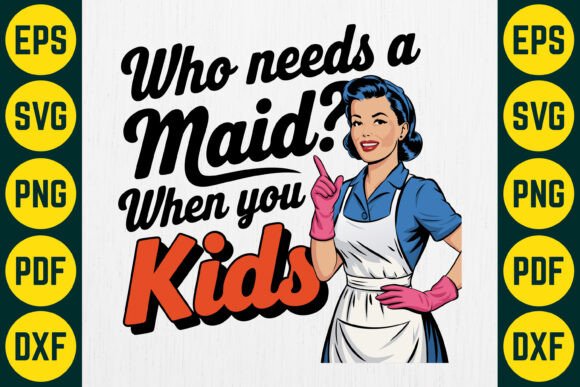
Who Needs a Maid When You Have Kids SVG
As an embroidery designer who spends half my life digitizing and the other half troubleshooting stitch errors, I have learned to approach every new design file with a healthy dose of skepticism. We are constantly bombarded with thousands of graphics in the Crafts category, promising ease and charm, but only a fraction actually translate well from screen to fabric. Recently, I pulled down the Who Needs a Maid when You Have Kids SVG to test its viability for real-world application. This retro sarcastic women’s design caught my eye not just for its humor, but for its potential as a staple in any craft business inventory. Here is my practical breakdown of how this design performs when you move it out of the digital realm and into your hoop.
First Impressions: Mood and Visual Personality
The immediate appeal of the Who Needs a Maid when You Have Kids SVG lies in its relatability. It taps directly into the chaotic, beautiful reality of modern parenting. The "retro" aesthetic suggests a vintage-inspired typeface or layout, which tends to age better on garments than trendy, fleeting fonts. For designers looking to create personalized gift items, this kind of emotional resonance is crucial. Customers do not just buy a shirt; they buy a statement that says, "I see you, and I get it."
The description mentions "fancy flourish style forest cut file images" with a square border. From a design perspective, the inclusion of flourishes adds a layer of elegance that balances the sarcasm of the text. Without those decorative elements, the design might feel too blunt. With them, it achieves a sophisticated yet playful vibe. The square border provides a contained area for the eye to rest, making it easier to visualize placement on various products. It feels structured, which is reassuring when planning complex layouts for custom apparel.
Real-World Application: Where This Design Shines
When I envision using the Who Needs a Maid when You Have Kids SVG, I immediately think beyond the standard t-shirt. While it works perfectly as a chest logo on a sweatshirt embroidery project, its versatility allows for more creative applications. Imagine this design centered on a high-quality canvas tote bag design. The bold nature of the text and the surrounding flourishes would hold up well against the heavy texture of canvas, creating a chic accessory for a mom on the go.
Another strong candidate is the kitchen towel or apron. In the world of holiday embroidery or birthday gifts, a kitchen towel featuring this design is a winner. It is functional, frequently used, and serves as a daily reminder of the wearer’s sense of humor. For Etsy sellers, this opens up opportunities for bundle listings—pairing the embroidered towel with a matching mug or tote. The design also translates beautifully to nursery decor or baby clothes, provided the scale is adjusted appropriately. A smaller version on a onesie or burp cloth can be incredibly endearing, turning a mundane item into a memorable keepsake.
For those selling embroidered patches, this design offers excellent potential. The square border naturally lends itself to a patch format. By adding a sturdy backing and perhaps a slight outline, you can create durable patches for denim jackets or backpacks. This expands your product line into commercial embroidery territories where durability and distinct branding are key.
Technical Considerations and Stitch Execution
Transitioning from an SVG to a machine-readable embroidery file requires careful attention to detail. Since the original asset is described as a "cut file," it is likely vector-based. If you are converting this for machine embroidery, you must decide how to interpret the text and flourishes. Will you use a dense fill stitch for the background shapes, or will you opt for a lighter running stitch outline? The choice of stitch type will drastically affect the final look and feel.
One critical factor is stitch density. Retro designs often rely on clean lines and readable typography. If the digitization process results in overly dense stitching, the fabric may pucker, especially if you are working with lightweight materials like jersey or thin cotton. Conversely, if the stitches are too sparse, the design may lack definition. I always recommend testing the design on scrap fabric first. Check the thread colors carefully; a high-contrast palette usually ensures that the text remains legible after washing and wear.
The "flourish style" mentioned in the product description introduces small, delicate details. These are the areas where embroidery projects often fail. Tiny loops or sharp corners can unravel or become muddled if the hoop size is too small or if the stabilizer is insufficient. Ensure you are using a proper stabilizer that matches the fabric weight. For stretchy fabrics, a cut-away stabilizer is non-negotiable to prevent distortion over time.
Where to Use Caution
While this design is versatile, there are specific scenarios where it may not perform optimally. Avoid placing detailed versions of the Who Needs a Maid when You Have Kids SVG on highly textured fabrics like bouclé or thick fleece without extensive testing. The texture can obscure the fine details of the flourishes. Similarly, be cautious with curved surfaces like baseball caps. If the design includes rigid straight lines or tight corners, it may not lay flat on the curve of a cap front. In such cases, simplifying the design or choosing a different placement might be necessary.
Additionally, consider the longevity of the garment. For items that require frequent washing, such as baby clothes or kitchen towels, ensure that the thread quality is high-grade polyester or rayon. Cotton threads may fade or break down faster, diminishing the professional appearance of the finished product.
Impact on Brand and Customer Trust
In the competitive landscape of handmade goods, presentation is everything. A well-executed embroidery project signals professionalism and care. When customers receive a handmade product that features crisp stitching, balanced spacing, and vibrant colors, their trust in your brand increases. The Who Needs a Maid when You Have Kids SVG, when done right, communicates that you understand both design aesthetics and technical execution.
Furthermore, the humorous nature of the design encourages social sharing. Customers love to post photos of their funny, relatable merchandise on social media. This organic marketing can drive traffic to your shop. However, this benefit is contingent on the quality of the finish. A sloppy job can undermine the humor and make the product look cheap. Therefore, investing time in proper digitization and testing pays dividends in customer satisfaction and repeat business.
Final Verdict for Designers and Sellers
The Who Needs a Maid when You Have Kids SVG is a solid addition to any designer’s toolkit. Its blend of retro charm, sarcastic wit, and structured layout makes it adaptable across a wide range of products. From apparel decorators to digital product sellers, this design offers flexibility and appeal. Just remember to verify the licensing terms before engaging in commercial embroidery sales. Ensure you have the rights to produce and sell finished items made from this design.
By treating the transition from digital graphic to physical object with respect—checking densities, testing on scraps, and choosing appropriate materials—you can turn this simple SVG into a best-selling item. It is a testament to the fact that great design is not just about how it looks on a screen, but how it feels in the hands of the customer. If you are looking to add a touch of humor and elegance to your small shop product lineup, this design is definitely worth the hoop space.